
Conversational Commerce in India: The Chat‑Based Commerce Revolution
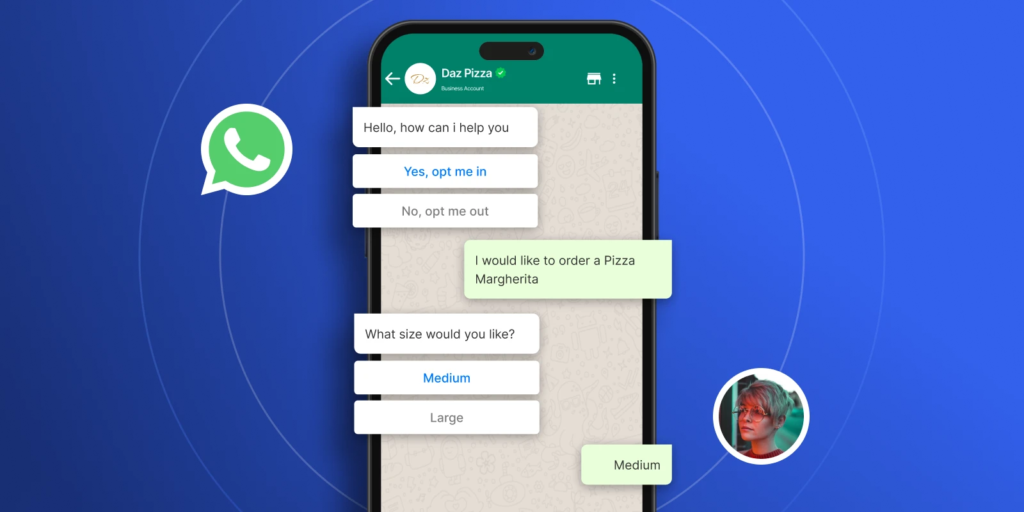
Conversational commerce — the merging of messaging apps and commerce — is not just a futuristic concept for India; it’s rapidly becoming a core way for businesses to engage, sell, and support customers. With over 487 million WhatsApp users in India and deep trust in chat-based communication, brands are realizing that customers prefer to shop and converse in the same app they use daily.
The rise of generative AI and advanced chatbots has supercharged this trend. According to Meta and Bain’s Win With Conversations report, more than 70% of surveyed large enterprises already engage at least half of their customer base via conversational platforms.
GenAI-powered assistants can now handle personalized sales journeys, catalog browsing, booking, and more — all within WhatsApp or other messaging apps.
In a country as diverse and mobile-first as India, conversational commerce promises not only efficiency but relational commerce — where businesses interact with customers in real time, build trust, and transact seamlessly. In this blog, we’ll walk through key trends, why it’s working in India, how to use it effectively, and what challenges to watch out for.
Key Trends Driving Conversational Commerce in India
1. GenAI + Messaging Power Combo
Generative AI is transforming how businesses run conversational commerce in India. According to Meta-Bain research, generative AI will be central to scaling personalized, real-time conversational journeys — driving sales, customer support, and engagement. With GenAI, businesses can automate responses, translate between languages, and even guide customers through catalogs within chat.
2. WhatsApp as the Primary Commerce Messaging Channel
WhatsApp is at the heart of India’s conversational commerce surge. With deep penetration and trust, it’s become more than just a chat app — businesses use it as a storefront. Quantique Minds reports that some SMEs using WhatsApp Commerce see 45–60% conversion rates, significantly higher than traditional e-commerce sites.
3. RCS (Rich Communication Services) Growing
Beyond WhatsApp, RCS messaging is emerging in India as a powerful alternative. With features like in-message payments, rich media, and interactive buttons, RCS enables even more seamless conversational commerce.
4. Increased Business Investment
According to multiple sources, 60% of large enterprises in India are planning to increase spend on conversational commerce over the next few years. This investment is not just for customer service — it’s for full transactional journeys.
5. Untapped Consumer Base
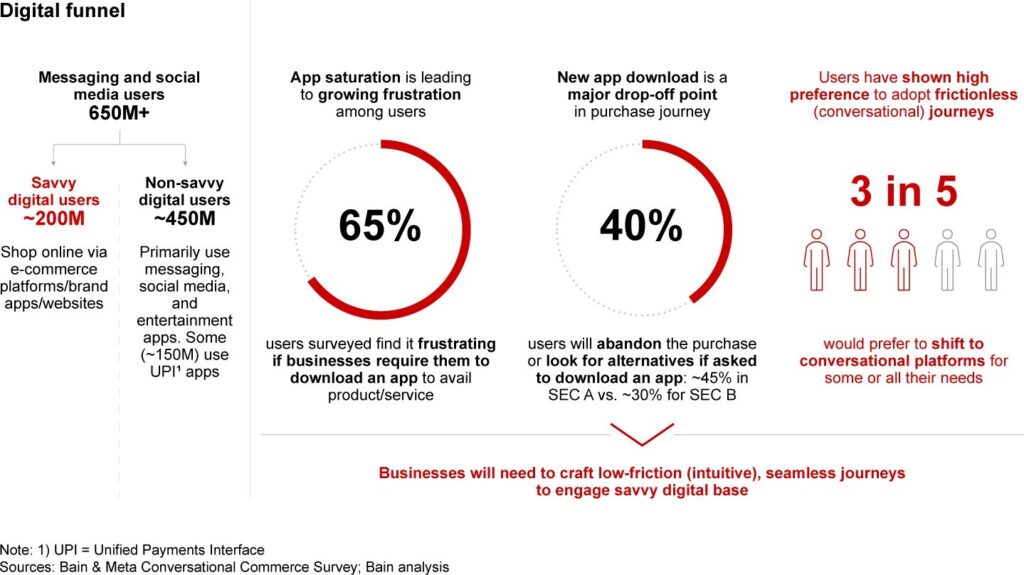
A major insight: only ~200 million of India’s 650 million social / messaging users currently shop online, according to Meta-Bain. Conversational commerce stands to bring the next 450 million shoppers into the digital economy by making commerce more accessible and familiar.
Why Conversational Commerce Works Exceptionally Well in India
- Trust & Familiarity: Indians already use WhatsApp to communicate with friends and family. Extending this to commerce eliminates friction and builds on existing trust.
- Accessibility for SMBs: Small and medium businesses (SMBs) find conversational commerce low-cost, scalable, and effective. They don’t need a complicated e-commerce platform; just a WhatsApp Business setup can work.
- Personalization at Scale: With GenAI, conversations can be tailored to each user’s language, history, and preferences.
- High-Frequency Interactions: For repetitive actions (groceries, bill payments, service requests),chat-based journeys are more intuitive than going to a website or app.
- Language & Inclusivity: Chat interfaces support regional languages and informal typing styles — helping reach users across India’s linguistic diversity.
How Indian Brands Can Leverage Conversational Commerce
1. Set Up a WhatsApp Business Storefront
- Use the WhatsApp Business API or App to list products, send catalog links, and take orders.
- Automate routine interactions using chatbots (e.g., product queries, order tracking).
2. Deploy AI‑Powered Chat Assistants
- Use GenAI agents to handle customer chat intelligently: answering questions, suggesting products, guiding purchases.
- Translate on the fly: support regional languages to serve a wider audience.
3. Use Rich Messaging with RCS
- Explore RCS for sending interactive messages (buttons, carousels) that let users browse and buy directly within chat.
- Integrate payments within RCS messages so users don’t need to leave the chat interface.
4. Build Conversational Funnels
- Design chat flows for discovery → customer education → purchase → post-purchase — all within messaging.
- Use segmented messaging: send catalogs, offers, and reminders based on user preferences and history.
5. Measure & Optimize
- Track metrics like message open rate, conversion rate via chat, average order value, and retention.
- A/B test different chat flows, bot scripts, and personalized greetings to see what converts best.
6. Leverage Generative AI Thoughtfully
- Use AI for scalability, but always monitor for accuracy and tone.
- Balance automation with human support for complex or sensitive conversations (returns, complaints).
Challenges Risks to Be Aware Of
- Privacy & Data Security: Messaging platforms carry sensitive customer data. Brands must ensure secure handling, encryption, and consent.
- Over-Automation: Relying too much on bots can feel impersonal or robotic. It’s crucial to maintain a “human feel.”
- Scalability Issues: As chat volumes grow, managing and scaling customer messages (especially with rich media) can be operationally challenging.
- User Education: Not all consumers are comfortable placing orders via chat; brands may need to guide them with tutorials or prompts.
- Cost of AI Agents: While scalable, using GenAI agents has a cost; brands must evaluate ROI carefully.
Future Outlook
- Conversational AI + Voice: As GenAI matures, voice-based chat commerce (via voice assistants) will grow, making conversational commerce even more natural.
- Wider RCS Adoption: With telecom players pushing RCS, chat commerce may shift from WhatsApp to other integrated messaging platforms with richer capabilities.
- Localization at Scale: Brands will increasingly use chat to serve users in many regional languages, turning conversational interfaces into truly inclusive storefronts.
- Conversational CRM: Messaging tools will become central to customer relationship management — not just for sales, but for loyalty, feedback, and support.
Conclusion
Conversational commerce in India is not a niche experiment— it’s becoming the next frontier of commerce. As GenAI, messaging apps, and trust converge, businesses have a powerful opportunity: to sell, support, and engage customers inside the apps they already use. For SMBs, enterprise firms, and D2C brands alike, adopting conversational commerce means meeting customers where they are — not just on a website, but in a chat.
For brands hoping to scale in India’s digital future, investing in conversational commerce is not just smart — it’s essential. The era of “chat + shop” is here, and the conversation has already begun.
